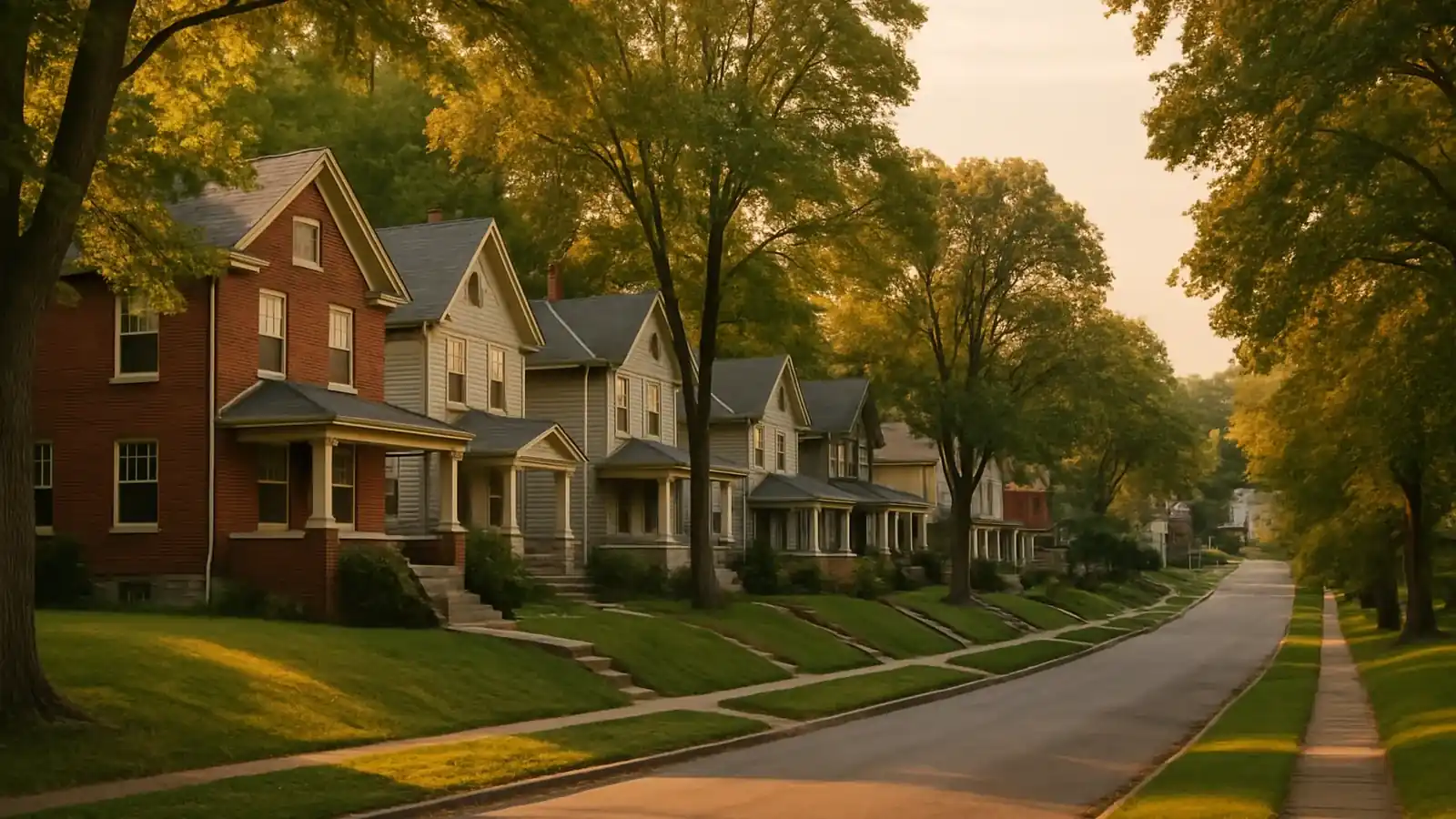
Foundation repair in Kansas City costs $3,800–$12,500 for most structural work: piers $1,200–$3,000 each, wall restraint from $2,500, crack injection from $400. The metro's Wymore-Ladoga clay (60–80% clay, USDA-rated “very high” shrink-swell) and 100+ freeze-thaw cycles a year keep foundations moving.
The symptoms, the federally documented soil behind them, and the repair that answers each one.
How KC houses report foundation trouble
- A horizontal crack tracking a block course: saturated clay pushing; the metro's signature failure
- Stair-step cracks through brick or veneer: a footing moving underneath
- Doors and windows racking by season: the shrink-swell cycle working the frame
- Winter heave at stoops and garage aprons: frost flexing shallow concrete
- Spring water at the wall-floor cove: Group D drainage doing what Group D does
- A floor tilting toward one corner: differential settlement asking for a laser survey
Single symptoms get monitored with a dated pencil mark. Combinations (or anything horizontal on a basement wall) get measured while the affordable fixes still apply.
The clay with a federal rating
Most metros describe their soil problems anecdotally. Kansas City's are in the USDA soil survey: the Wymore-Ladoga complex runs 60–80% clay content and carries the survey's “very high” shrink-swell rating. It swells hard when wet and contracts hard when dry, cycling real force against footings and walls. Its drainage classification is Hydrologic Group D, the worst class: rain doesn't soak away, it parks against your foundation. Then winter arrives, and this metro's 100+ freeze-thaw cycles a year turn that parked moisture into a jackhammer, which is why local code sets frost depth at 36 inches, deeper than St. Louis, deeper than most of Kansas.
None of this is bad luck. It's a documented operating environment, and repairs here get engineered for it: piers below the active clay, restraint sized for real lateral loads, and drainage treated as structural work because in Group D soil, it is.
The repair menu, matched to the failure
| Failure | Fix | Typical range |
|---|---|---|
| Footing settlement | Steel piers to load-bearing strata | $4,000–$15,000 |
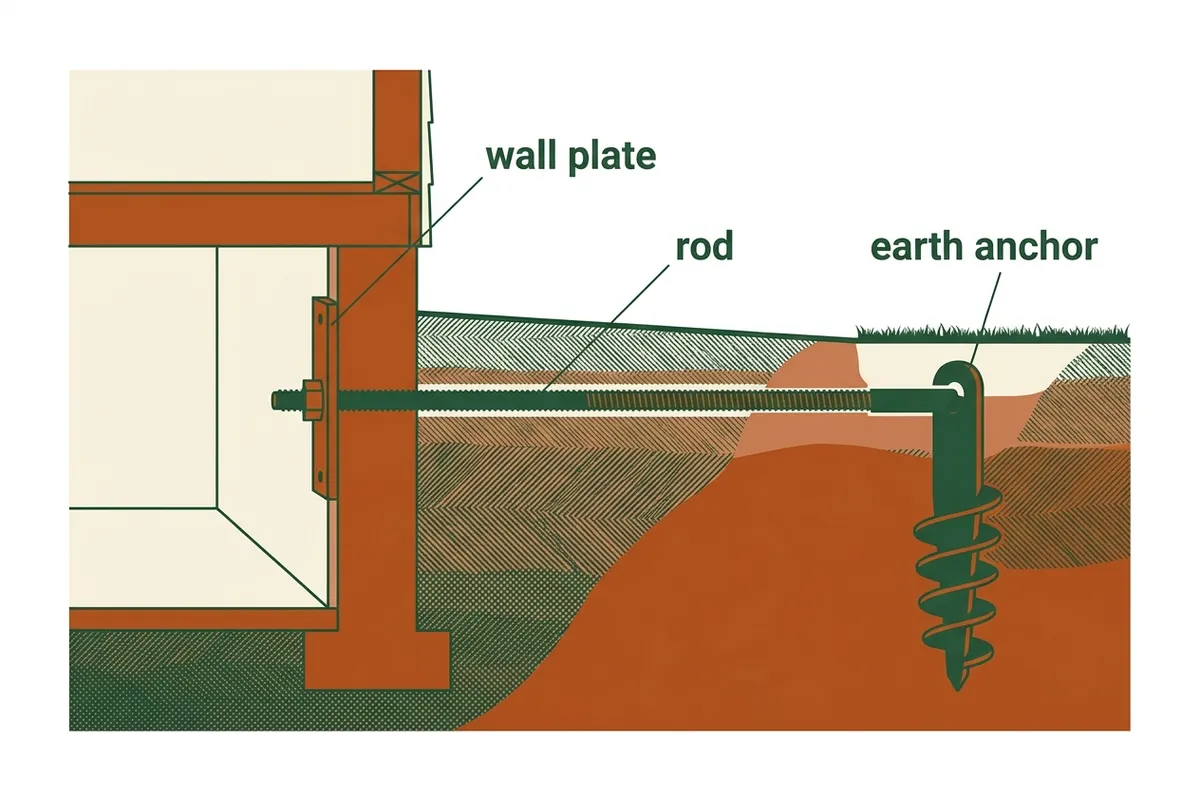
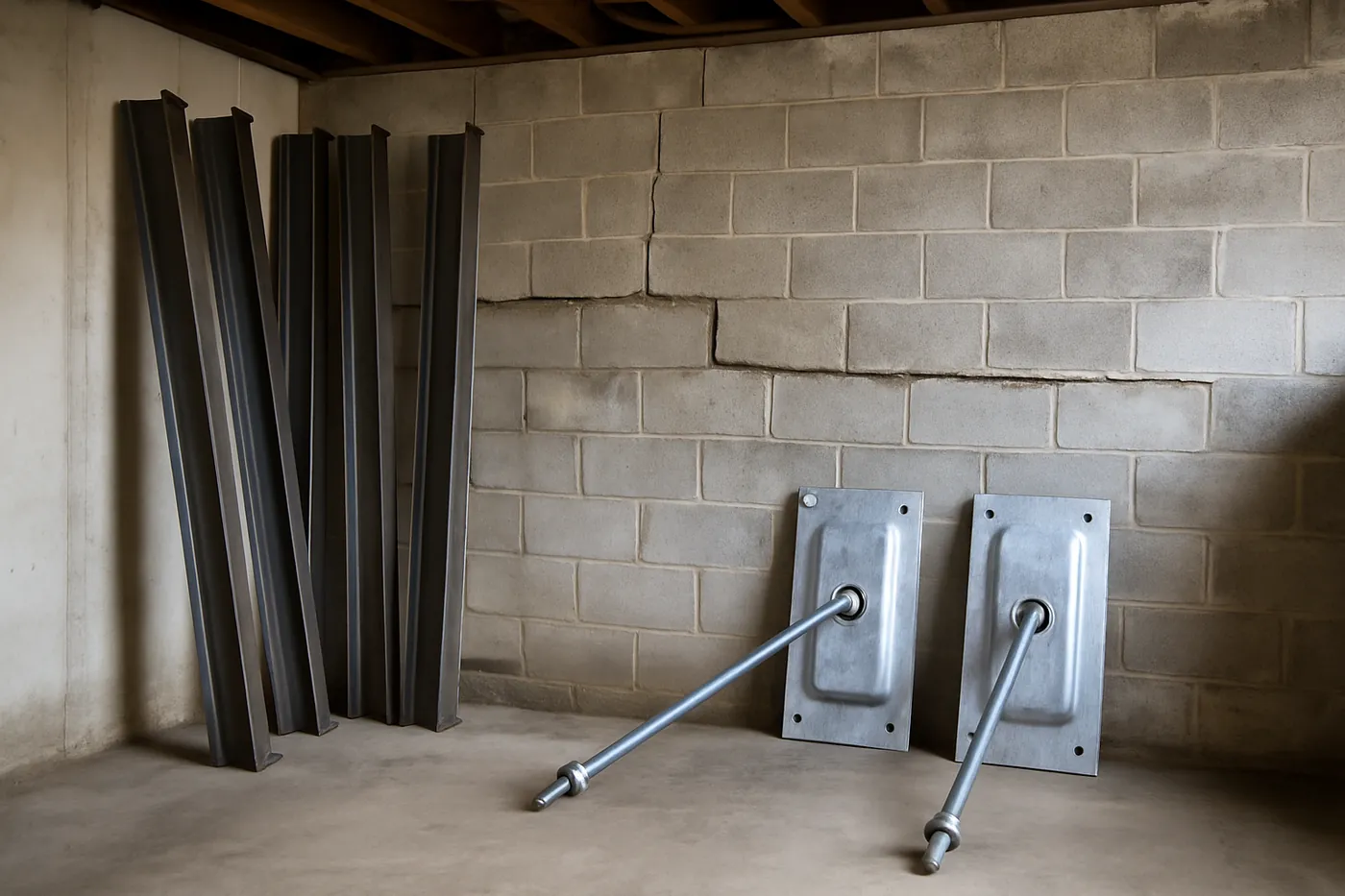
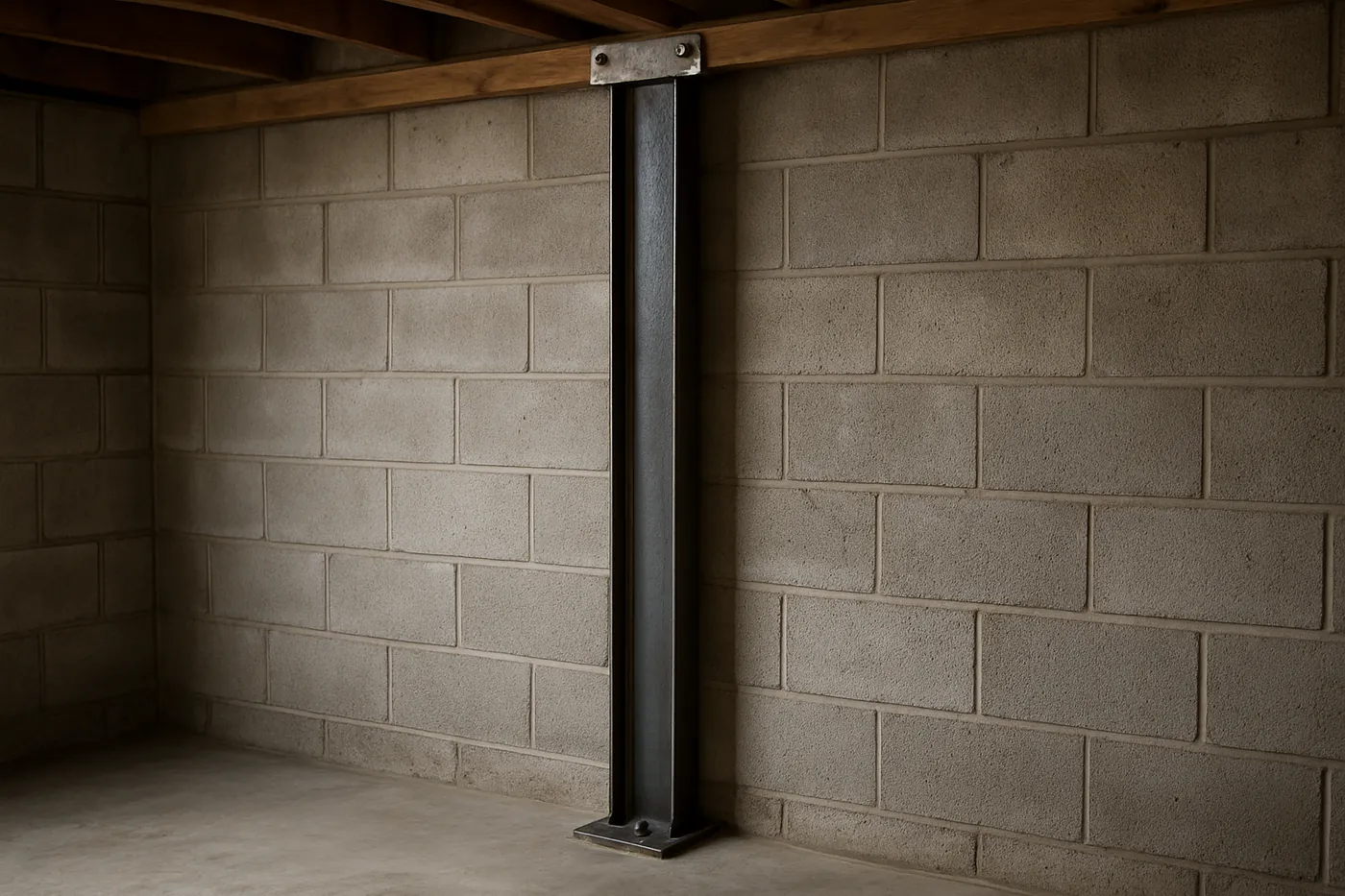
| Wall bowing under clay pressure | Straps, anchors, or steel braces | $2,500–$10,000 |
| Cracks leaking or widening | Injection + carbon stitching | $400–$1,500 |
| Group D water winning | Perimeter drainage + sump | $2,500–$8,000 |
| Heaved or sunken slabs | Foam leveling | $500–$2,500 |
Every scope opens with the same evaluation: laser floor levels, wall-deflection readings, a logged crack map, and the lot's water story, then fixed line-item prices in writing.
The decisions behind the table go deeper on their own pages: how to measure settlement on very-high shrink-swell clay, when helical piers beat push piers under brick or frame, how exterior and interior waterproofing compare on soil that won’t drain, what insurance covers after a burst line, and when an independent structural engineer is worth the fee.
Both sides of State Line Road
The metro's soil doesn't respect the border, and neither does this site's coverage: Missouri-side from Independence and the Northland down through Raytown and Grandview, Kansas-side across Johnson County's Overland Park and Olathe. Each community page reads its own ground; the evaluation reads your lot.
Foundation questions Kansas City homeowners ask
How much does foundation repair cost in Kansas City?
Most Missouri structural repairs run $3,800-$12,500, with piers at $1,200-$3,000 each and big multi-pier jobs above $15,000. Wall restraint runs $2,500-$10,000, crack injection from $400. Where a KC house lands depends on movement measured, not guessed. Ask for the numbers. Our Foundation repair cost breakdown for Kansas City shows what drives each figure, line by line.
What's special about Kansas City's soil problem?
It has a federal paper trail. The metro sits on the Wymore-Ladoga clay complex: 60 to 80 percent clay content, rated 'very high' for shrink-swell by USDA, in drainage Group D, the worst-draining class. Add the region's 100+ annual freeze-thaw cycles and a 36-inch code frost depth, and KC foundations work harder than almost anywhere in the Midwest.
Why does the frost line matter to my repair?
Kansas City code sets footings 36 inches down because frost heave here is real force: freezing soil can lift and crack anything shallower. Repairs respect the same physics: piers drive far below frost and the active clay, and exterior work is scheduled so open excavations never take a hard freeze.
Is the Kansas side covered?
Yes: Johnson County included. Overland Park and Olathe sit on the same clay story as the Missouri side; the state line changes the sales tax, not the soil. One evaluation standard, both sides.
Which basement walls fail most in KC?
Block walls facing poor drainage. Group D soil sheds water so badly that every rain parks moisture against the foundation, and the lateral push bows block at mid-height: the classic horizontal crack. South- and west-facing walls that take the freeze-thaw sun cycle hardest often go first.
Is a hairline crack after a dry summer normal here?
Common, and worth logging. KC's clay contracts hard in drought, footings drop slightly, and hairlines appear at corners. Some close again when moisture returns. Pencil-date it, measure it, and if it widens past a quarter inch or picks up friends, get the measured look.
What warranty should I expect on repairs?
Structural systems commonly carry written, transferable warranties; ask for the terms in the scope before signing. In a metro this experienced with foundation work, buyers and inspectors read documented repair as an asset, and undocumented movement as a negotiation.
How soon can a specialist evaluate my house?
A local specialist calls you back to set a time, on both sides of the metro. How soon depends on their schedule. If something is moving right now, say so when you call.
Foundation repair across the metro
Blue Springs · Gladstone · Grandview · Independence · Lee’s Summit · Liberty · Olathe · Overland Park · Raytown · all service areas
Get a Kansas City foundation evaluation
Tell us what the house is doing (cracks, a leaning wall, doors gone crooked, water in the basement) and we'll pass your request on for an evaluation. A specialist who serves the Kansas City area will call you back.