
Exterior foundation waterproofing in Kansas City seals the wall but requires full-depth excavation; interior perimeter drainage runs $2,500–$8,000 and gives water a controlled exit at the footing. On Group D soil that barely drains, most occupied KC homes choose interior drainage plus aggressive surface routing.
What each system buys on non-draining ground, and how freeze-thaw tips the durability math.
KC’s water problem is a drainage-class problem
The Wymore-Ladoga soils under this metro sit in Hydrologic Group D — the class that transmits water most slowly. Rain and snowmelt don’t percolate away; they linger against basement walls as saturation, swelling the 60–80% clay and pressing water at every joint and crack. That’s why KC’s wet basements are rarely dramatic floods and usually relentless seep — and why the winning strategy is controlling where water goes, since the ground won’t take it. The waterproofing page carries the sump and discharge detail this comparison builds on.
The two systems, honestly compared
| Exterior membrane | Interior drainage | |
|---|---|---|
| Promise | Water stopped at the wall face | Water exits at the footing; floor stays dry |
| KC cost | Per wall — excavation dominates | $2,500–$8,000 full perimeter |
| Disruption | Full-depth dig around an occupied house | Interior slab-edge work, days |
| Freeze-thaw exposure | Coatings ride backfill churned 100+ cycles a year | Below the frost action entirely |
| Saturation pressure | Wall sealed; Group D soil still presses | Relieved — water gets its exit |
| Best case | Wall already open for structural work | Occupied house, finished basement, seasonal seep |
Where waterproofing meets foundation repair
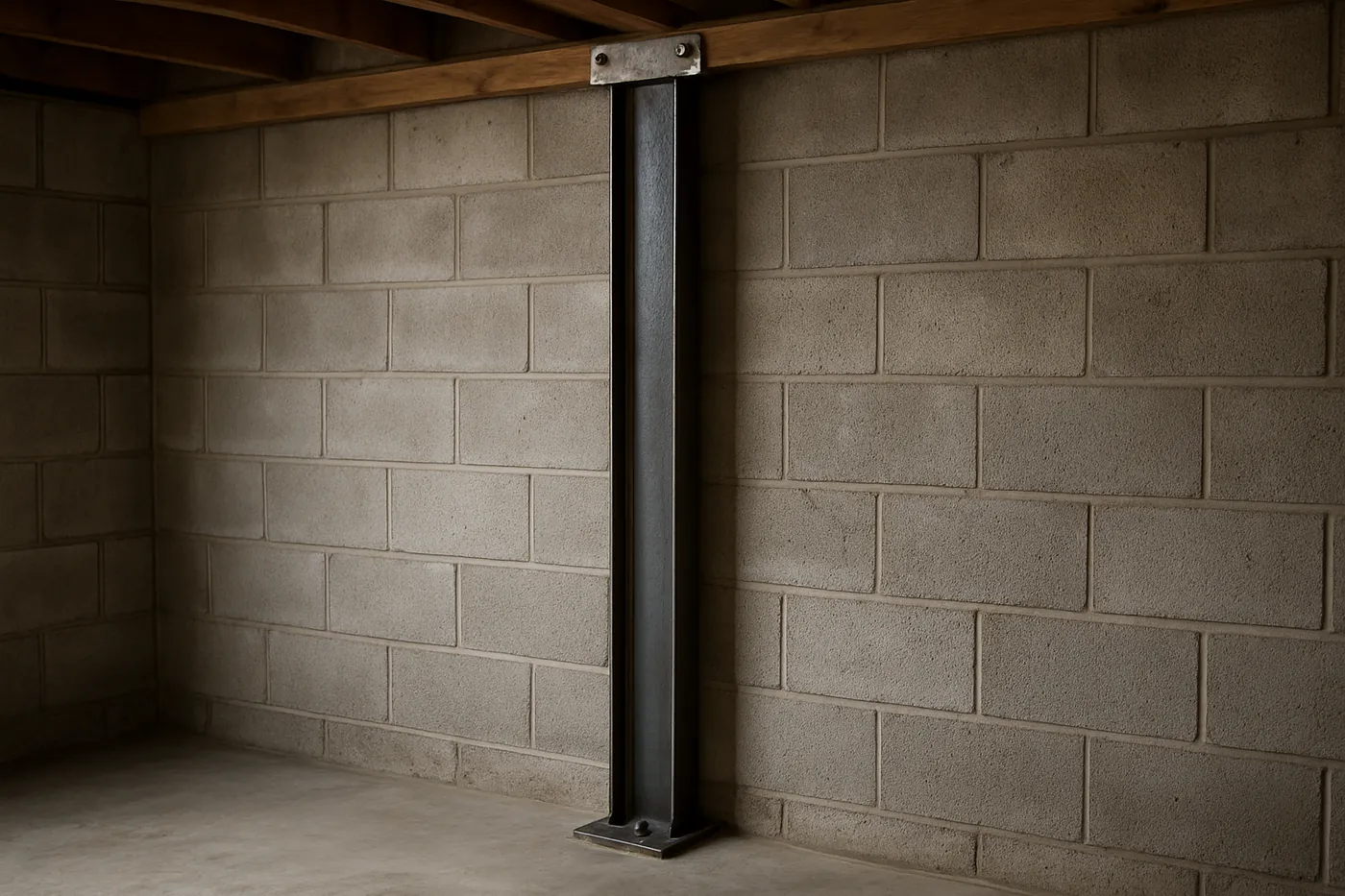
The saturation that seeps also pushes: KC’s clay, wet and undrained, loads basement walls laterally, and the bowing wall is this metro’s companion failure. When wall restraint opens the exterior anyway, membrane and a footing drain go in for the cost of materials — the main honest case for exterior work on an existing house. And when the same moisture cycle has already moved the structure, the settlement question gets answered before any water system goes in: relevel first, waterproof once. Sequencing lives in the written scope; every price lives in the cost guide.
Surface routing: the only drainage KC ground offers
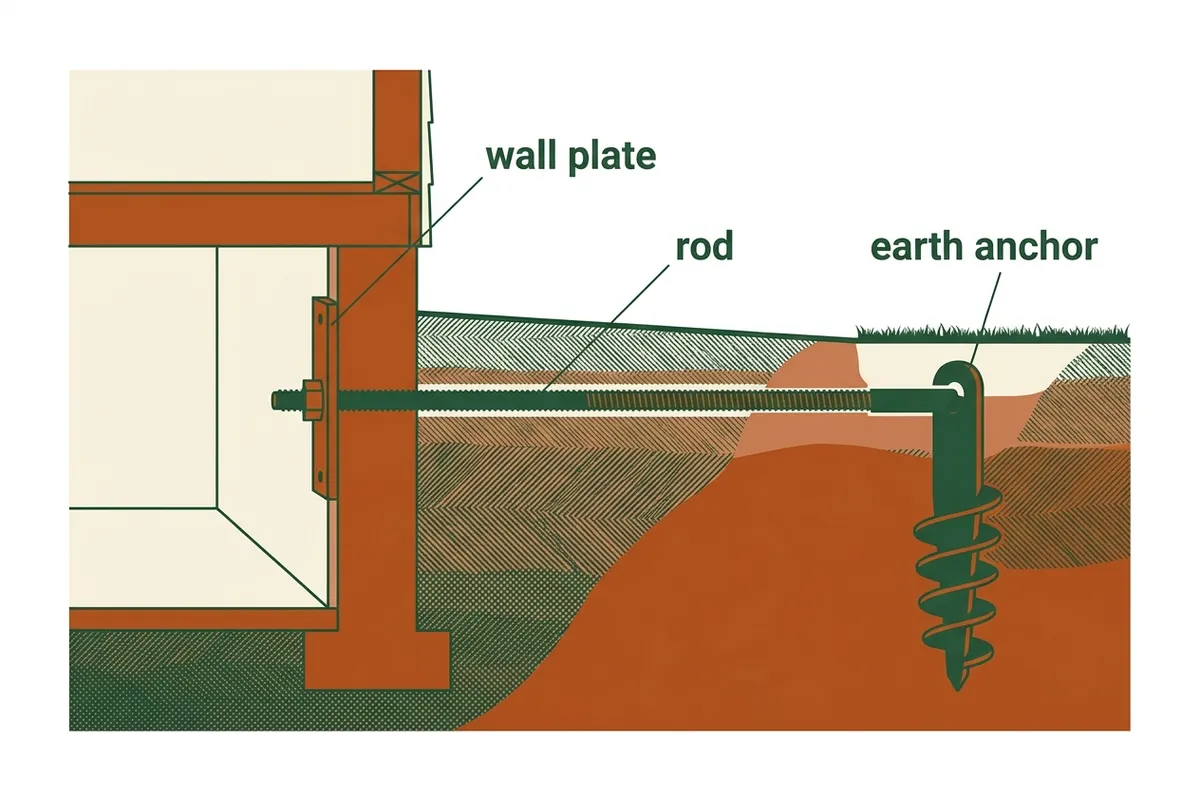
On permeable soil, some roof water disappears harmlessly. On Group D, none of it does — whatever the gutters concentrate, the clay keeps. Downspout extensions, grading that falls away from the wall, and a working discharge route are cheap, first, and non-optional here; they shrink every system the basement still needs and slow the clay cycle driving settlement at the same time. Every evaluation we run starts at the downspouts, because on this soil that’s where the story usually starts.
What the system needs from you afterward
Interior drainage is machinery, and machinery earns a service interval. Twice a year, pour a five-gallon bucket into the sump pit and watch the float lift and the pump discharge — that one test catches most failures before the water does. Follow the discharge outside and confirm it still carries water well away rather than returning it to clay that can’t take it. Before the first hard freeze, check the line can’t ice shut; with this many freeze-thaw cycles, a frozen discharge is how a working pump floods a basement overnight. Then the free half: clean gutters, extended downspouts, and grade falling away for the first ten feet.
Waterproofing questions, straight answers
Why do KC basements take so much water?
Because the ground refuses to help. Hydrologic Group D soil — the worst-draining class — means rain and snowmelt can't percolate away; they sit against basement walls as saturation and pressure. Add 100+ freeze-thaw cycles working the backfill and you get the metro's signature wet basement: not a flood, just relentless seasonal seepage.
Which system fits that problem better?
Interior drainage, usually. On soil that won't drain, the honest goal is managing water that will arrive no matter what — a perimeter channel and sealed sump at $2,500 to $8,000 gives it a controlled exit. Exterior membrane seals the wall face but leaves saturated Group D soil pressing on the structure, and it costs an excavation to install.
Doesn't exterior waterproofing protect the wall itself?
It does — that's its genuine advantage, and on an already-open wall it's worth taking. The catch in KC is durability: exterior coatings live in backfill that a hundred annual freeze-thaw cycles churn and resettle, which shortens coating life here relative to milder climates. Interior systems sit below the frost action entirely.
When is exterior clearly right in KC?
When the excavation is already bought. Bowing-wall repairs that open the outside, additions, and new construction all put membrane and footing drain within reach for the cost of materials. Buying a full-perimeter dig around an occupied Overland Park or Liberty house purely for waterproofing rarely beats interior drainage on any axis.
What belongs before either system?
Surface routing, aggressively — it matters more here than in draining soils. Downspout extensions, grading that falls away, and a working discharge path are the only 'drainage' Group D ground will ever offer, because the soil itself won't take the water. A share of KC seepage calls resolve at the gutters; every remaining one needs a smaller system after.
Get a free Kansas City foundation evaluation
Tell us what the house is doing — cracks, a leaning wall, doors gone crooked, water in the basement — and we'll schedule an evaluation with photos and crack measurements. We reply the same business day.