
Helical and push piers for Kansas City foundation repair both run $1,200–$3,000 per pier; the choice follows structure weight. Push piers drive to logged refusal using the house’s mass — right for older brick — while helicals torque to measured capacity, fitting light postwar frame, porches, and additions.
How each proves itself, and how KC’s housing eras and deep frost line sort the choice.
Two proofs of the same promise
A pier’s job here is to carry load below everything that moves — beneath the 60–80% clay’s swing zone and the hundred-cycle frost churn above it — to bearing that holds still. A push pier is hydraulic steel driven beside the footing using the structure as reaction weight until it refuses to advance; the logged refusal is its proof. A helical pier screws in on welded plates, and installation torque correlates with capacity — the gauge proves it as it turns, no house weight required.
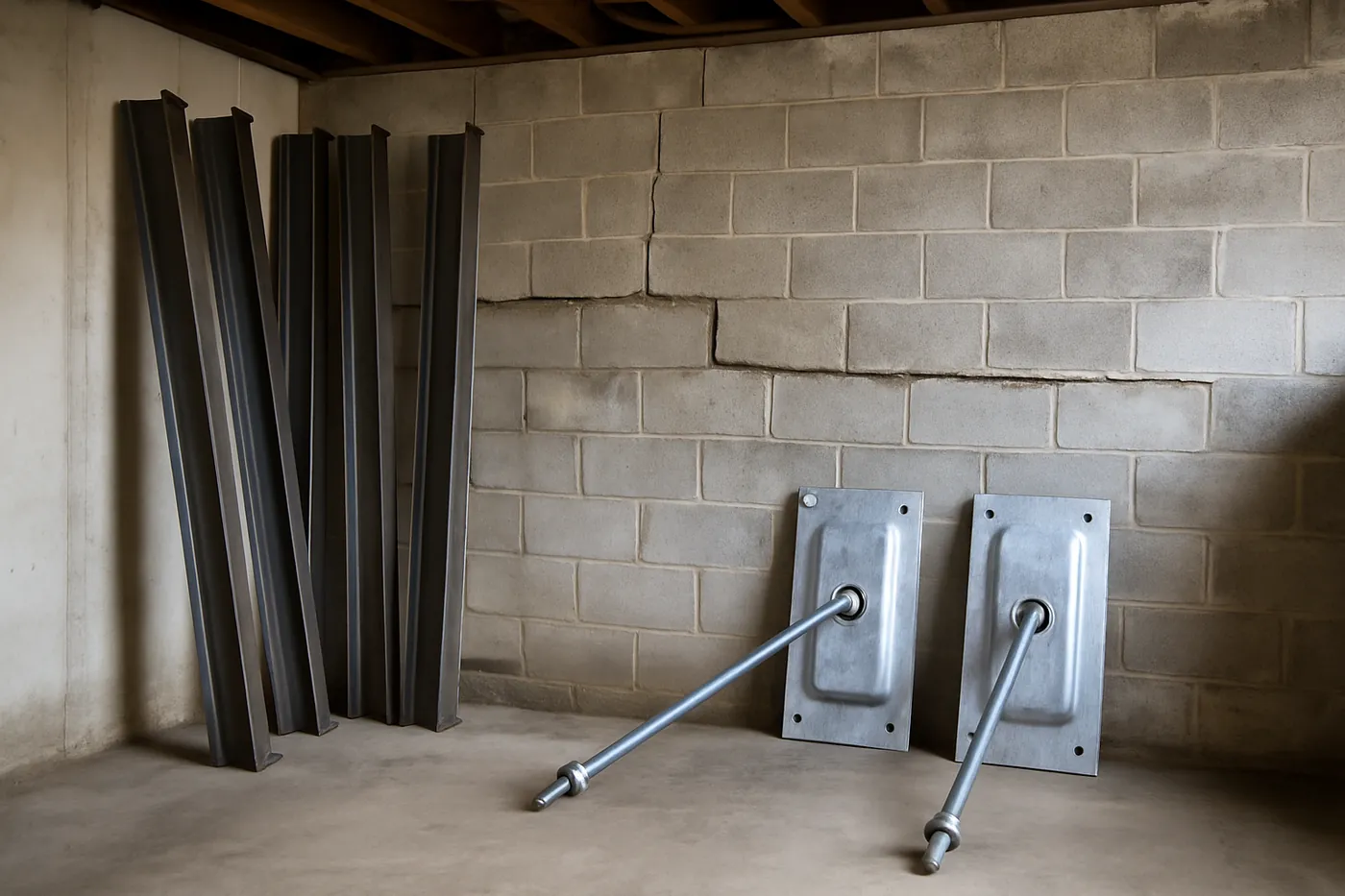
Side by side
| Push piers | Helical piers | |
|---|---|---|
| Advance | Driven against the structure’s weight | Rotated to specified torque |
| Proof | Refusal pressure, logged per pier | Installation torque, logged per pier |
| Needs house weight | Yes | No |
| KC sweet spot | Older masonry: Brookside-era brick, stone foundations | Postwar frame: Raytown, Gladstone ranches; porches, additions |
| New construction | No | Yes — proven before framing |
| Cost | $1,200–$3,000 per pier; depth to bearing sets the spread | |
What KC ground does to the decision
Two local facts shape every pier scope. First, the housing split: the metro’s older masonry has weight to drive push piers honestly, while the vast postwar rings are light enough that helical torque is the more truthful proof — and mixed jobs, a heavy main footing plus a light porch, routinely carry both types under one warranty with both logs. Second, the frost line: KC’s 36-inch code depth reflects a freeze-thaw regime that churns everything shallow, which is why under-built stoops and porch footings fail first here and why light attachments end up on helicals almost by default. Whether piers are the right repair at all is the settlement diagnosis; install mechanics live on the piering page.
Lifting brick without writing new cracks
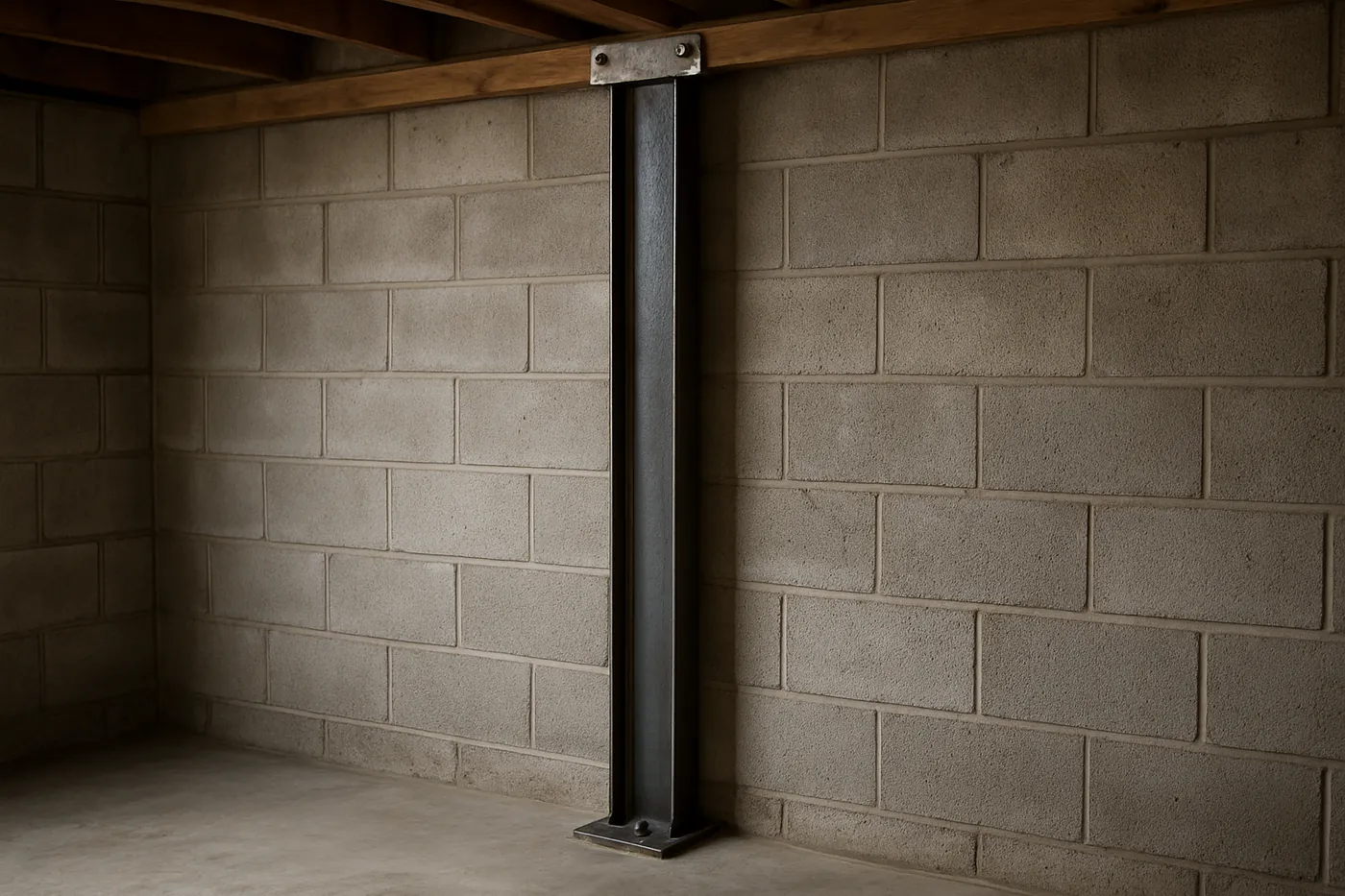
KC’s older stock adds the lift question: recovery on brittle masonry happens in small synchronized increments against live crack monitoring, or not at all where the structure argues against it — stabilization without lift is sometimes the honest scope, stated in writing before steel goes in. Cracked joints get injection and stitching after movement stops. The arithmetic behind pier counts and depths is in the cost guide.
What the pier warranty is actually worth
Read the warranty before the price. It covers the piers’ capacity — the supported section carrying its design load — not the whole house, and not the parts nobody piered. Four questions separate a real warranty from a brochure: is it transferable to the next owner, does the transfer cost a fee, does it cover the piered section or the structure, and does it survive the contractor closing its doors (third-party-backed warranties do; handshake ones don’t). Ask whether it is conditioned on drainage maintenance you owe — on worst-draining Group D clay that clause is both common and fair. Keep the depth and torque log: with a 36-inch code frost depth, how deep the pier went is the whole point.
Pier questions, straight answers
Do the two pier types cost differently in KC?
No — both run $1,200 to $3,000 per pier, and the spread inside that range comes from depth to stable bearing and access, not from the steel. What differs is the proof each offers: logged refusal pressure for push piers, logged installation torque for helicals. Which proof your house can deliver is a weight question, and that's how the choice actually gets made.
Which type fits KC's older brick and stone stock?
Push piers, generally. Two-story masonry around Brookside, the Northeast, and the older ring suburbs carries real reaction weight, and driving steel to honest refusal under that mass is as convincing as pier proof gets. The same houses demand careful staged lifting — brittle masonry punishes enthusiasm — which affects labor, not pier choice.
Which type fits postwar ranches and split-levels?
Helical, usually. The one-story frame stock across Raytown, Gladstone, and Independence is light; a push pier reacting against it can run out of house before convincing refusal. Helicals prove capacity by torque, independent of the structure — which also makes them the default under porches, stoops, and additions across the metro.
Does the 36-inch frost depth change pier work?
It sets the floor, not the goal. Piers pass through the frost zone on their way to bearing well below it — the point is to carry load beneath everything that moves, and KC's churned, freeze-cycled top layers are exactly what to get under. What frost depth does affect is shallow footings and stoops, which is why light attachments fail here first and end up on helicals.
What documentation should any pier bid include?
Three commitments: per-pier proof logging (torque or refusal), the depth assumption with pricing beyond it, and which structures at which locations justify the pier type chosen. Bids that answer all three converge toward the same honest scope. Ours arrives with the logs promised in writing and a transferable warranty they attach to.
Get a free Kansas City foundation evaluation
Tell us what the house is doing — cracks, a leaning wall, doors gone crooked, water in the basement — and we'll schedule an evaluation with photos and crack measurements. We reply the same business day.