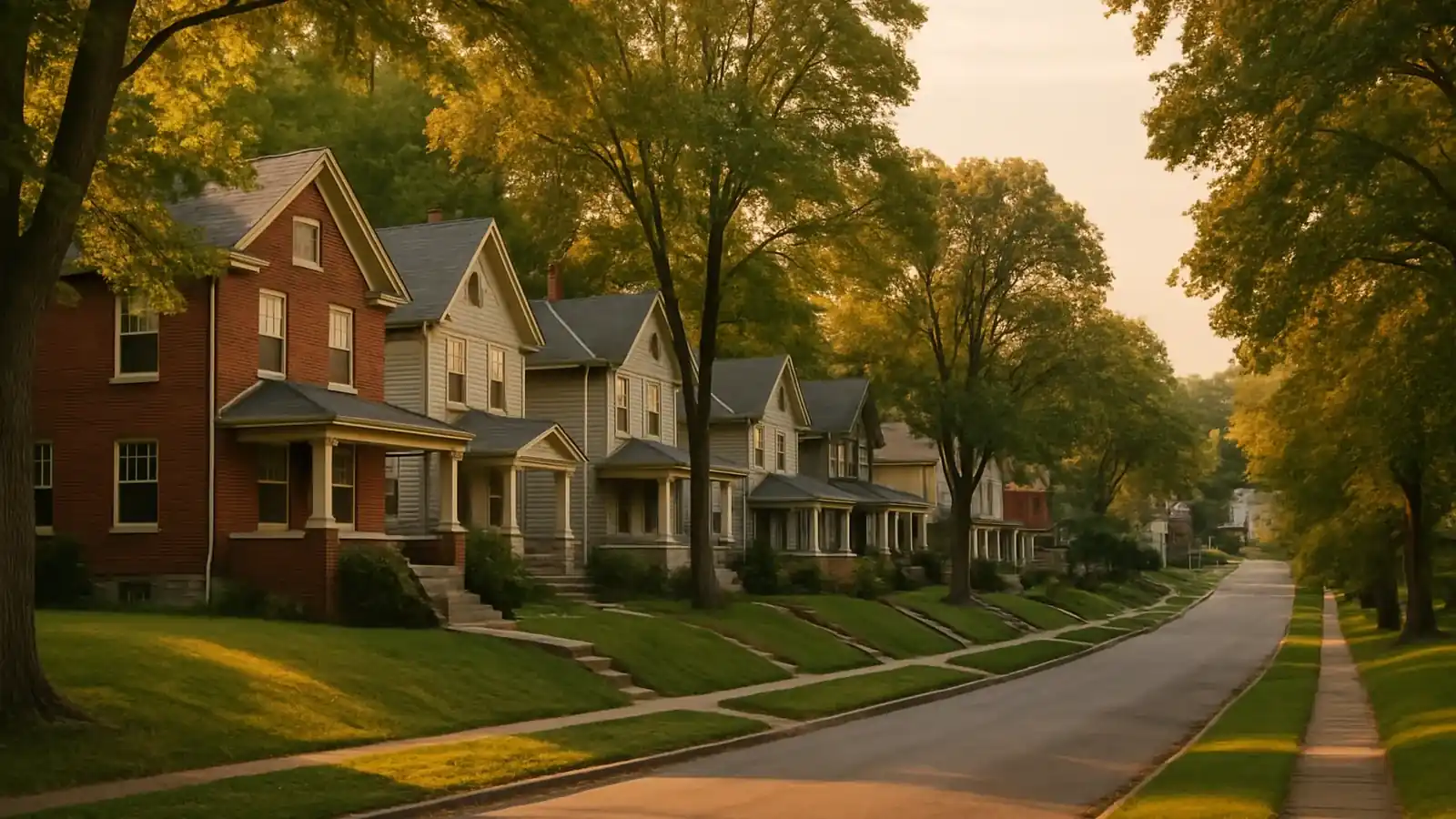
Bowing basement wall repair in Kansas City costs $2,500–$10,000 for most homes: carbon fiber from ~$350 per strap, anchors and steel beams above. With clay rated “very high” for swell and drainage classed worst-in-survey, KC walls carry lateral loads most metros never meet: bowing is this city's signature failure.
Reading the deflection, matching the system, and closing the water half.
What the wall is up against
Stand outside after a storm and picture the soil column against your basement: eight feet of saturated Wymore-Ladoga clay, draining almost nowhere, swelling as it holds. The wall carries that push every wet week, relaxes through drought, then does it again: decades of one-way flexing concentrated at mid-height. Block confesses first (the horizontal bed-joint crack, the sighted bulge); poured walls hold longer, then crack horizontal too. The wall never wins on its own. It holds, or it doesn't.
Restraint systems, by the inch
| Measured deflection | System | What you get |
|---|---|---|
| < ~2 inches | Carbon fiber straps | Wall bonded into tension strength; movement stops here |
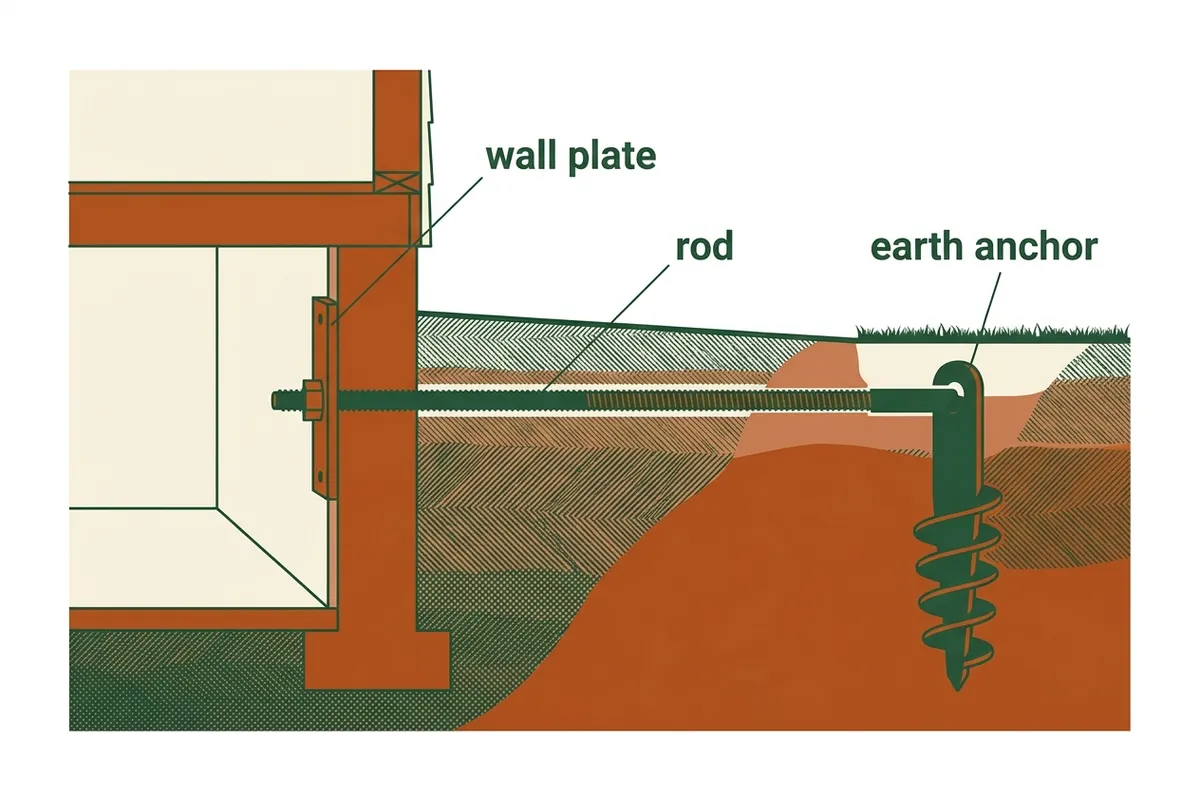
| Moderate, yard available | Plate anchors | Earth-anchored rods, tightened seasonally: can recover lean |
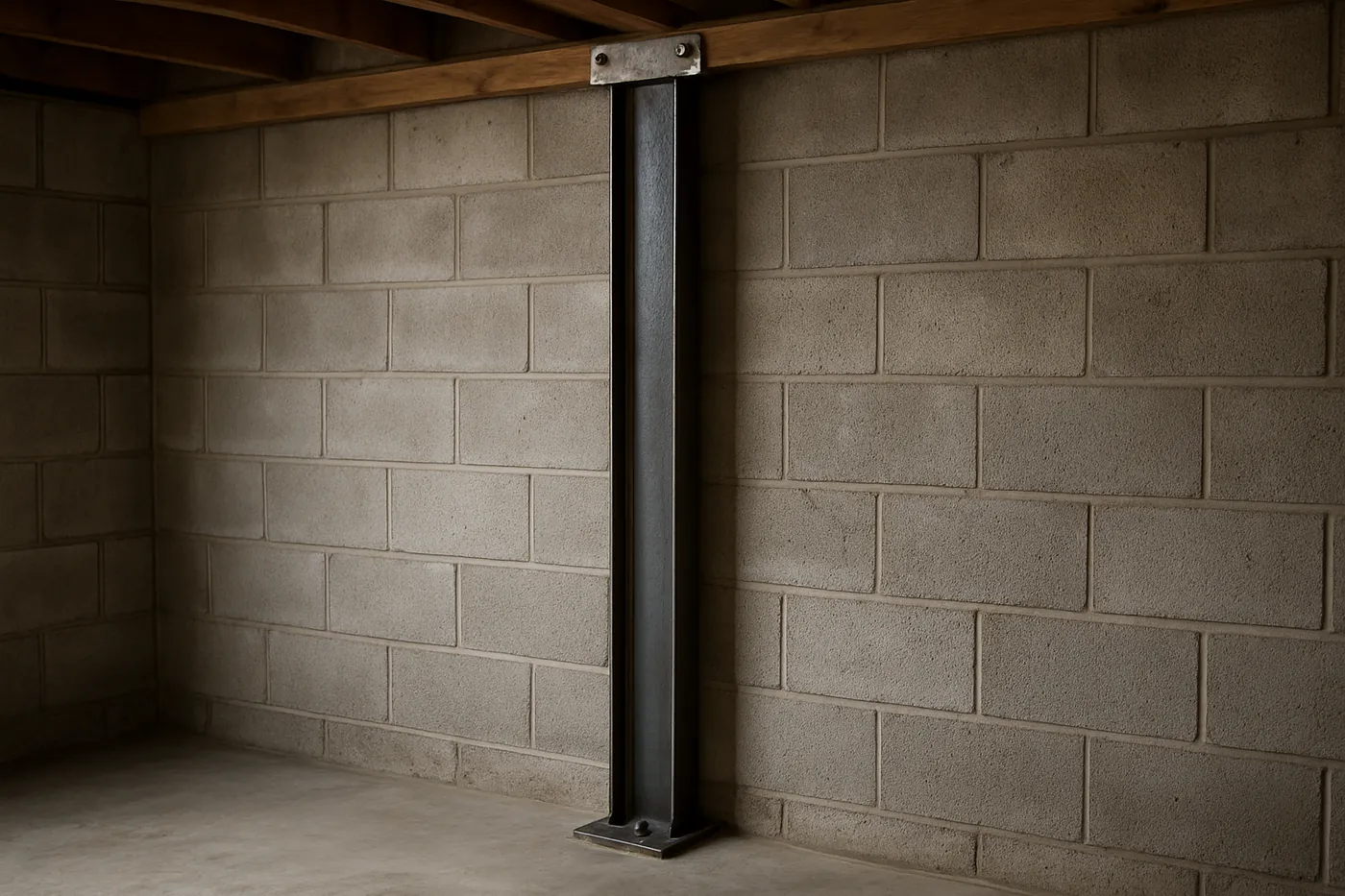
| Moderate, no yard access | Steel I-beams | Footing-to-joist steel takes the load from inside |
| Severe | Straighten / rebuild | Excavated, pushed home or relaid: the honest top of the scale |
Ask for a written transferable warranty on every install, and for the deflection readings that justify each recommendation, so you can hand the file to any second opinion.
The water half is not optional
In this soil, wall restraint without water management is a subscription. Scopes pair the steel with the exits: downspouts carried genuinely away, grading rebuilt to shed, and where pressure is chronic, perimeter drainage bleeding the footing zone. Group D ground won't drain itself, so it needs plumbing. That pairing is why good repairs stay repaired; ask for it priced beside the restraint line.
Priced by the season you call
Wall work has the steepest wait-penalty in KC foundation repair: strap money this spring becomes anchor money in two, straighten money in five. Wet years accelerate the schedule. The measured baseline is the cheap move, even if the answer is “watch it,” you'll be watching with numbers.
I-beams, plate anchors, and picking the right restraint
KC's wall-repair menu leans steel because KC's clay push is heavyweight. Carbon fiber still opens the ladder: under an inch of deflection, straps lock a wall before the next saturation cycle. Past an inch, this metro's two workhorses take over: steel I-beam braces, seated at the footing and pinned to the joists, which resist from inside without yard excavation; and plate anchors, threaded rods reaching through the soil to buried earth anchors, which can pull a wall gradually straighter across dry seasons. The choice is usually access arithmetic: anchors need yard clearance beyond the backfill zone; braces need ceiling framing that can take the reaction load.
Either way, the water rule precedes the steel rule: Group D soil drains worst-in-class, so every wall scope here carries the drainage and downspout lines ahead of the restraint lines. Steel that fights saturated clay all spring is steel on overtime: dry the backfill and the same wall system holds with margin to spare.
Wall repair questions, straight answers
Why is wall bowing so common in Kansas City?
Because Group D drainage parks every rain against basement walls, and very-high-rated clay swells as it drinks. That's lateral force on a schedule: block walls answer with a mid-height horizontal crack and a slow lean. It's not builder error; it's the operating environment, and it's restrainable.
What does bowing wall repair cost here?
Most KC walls land between $2,500 and $10,000: carbon fiber from roughly $350 per strap for early bowing, anchor and beam systems above that for real deflection, excavation-and-straighten beyond. The deflection number (measured, not eyeballed) picks the lane and the price.
How is the choice made between straps, anchors, and beams?
Inches decide. Under about two inches with a sound footing: carbon fiber locks the wall where it stands. More: anchors (needs yard) or I-beams (doesn't), both tightenable across seasons to recover some lean. Past trust: straighten or rebuild, quoted plainly, because strapping a failed wall is malpractice with a warranty card.
The crack runs along one mortar joint the whole wall. Bad?
That's the textbook presentation: lateral pressure finds the bed joint at maximum bending, mid-height, and writes a horizontal line along it. It deserves prompt measurement. Early-stage walls are strap-priced; every additional wet season promotes the invoice.
Should the water that did this be stopped too?
That's half the scope by design. Restraint answers the wall; drainage answers the why. In Group D soil a good scope pairs them as default (grade and gutters minimum, perimeter relief where pressure is chronic) because restrained-but-still-soaked walls keep the fight going against any warranty.
Get a Kansas City foundation evaluation
Tell us what the house is doing (cracks, a leaning wall, doors gone crooked, water in the basement) and we'll pass your request on for an evaluation. A specialist who serves the Kansas City area will call you back.