
Foundation settlement repair in Kansas City runs $3,800–$12,500 for most homes, with piers at $1,200–$3,000 each placed where an elevation survey shows the footing dropped. Wymore-Ladoga soils — 60–80% clay, USDA “very high” shrink-swell — drive settlement harder here than in most metros.
Why KC clay hits harder, what the freeze-thaw count adds, and what repair involves.
The highest-amplitude clay in our region
Every Midwest clay market shares the mechanism: soil loses moisture, contracts, and lets the footing down; the wet season swells it back, but never fully, and the loss compounds. Kansas City runs that mechanism at higher volume. The Wymore-Ladoga complex under the metro is 60 to 80 percent clay — USDA rates its shrink-swell potential “very high” — so each moisture swing moves more soil. And because the same soils sit in Hydrologic Group D, the worst-draining class, water that arrives stays concentrated instead of dispersing: the wet spots get wetter, the dry spots stay dry, and the difference under one house is what racks it.
Differential settlement — one footing run dropping while the rest holds — is the version that costs money, and KC’s pattern is directional: baked south and west exposures, downspout corners, and root zones of mature trees in Brookside-era neighborhoods all cycle harder than the shaded north wall.
What a hundred freeze-thaw cycles add
KC logs 100-plus freeze-thaw cycles a year, and each one is a small hydraulic event in the top three feet of soil — water freezes and expands, thaws and resettles, over and over. For a foundation that means three things: cracks the summer opened get worked wider all winter, backfill against basement walls loosens and resettles, and the shrinkage gaps under footings fill with churned debris so the clay’s spring swell can’t push the house back where it was. The 36-inch code frost depth exists precisely because of this churn — and everything above that line lives in it.
The signs, and what each usually means
| What you see | What it usually means | First move |
|---|---|---|
| Stair-step cracks in brick or block | Differential settlement — widest near the dropped run | Photograph, measure widths |
| Doors sticking on one side, worsening yearly | Frames racking as that wall drops; accumulation, not seasons | Note the trend, then survey |
| Floor sloping toward a corner | Settlement on that footing run | Laser elevation survey |
| Cracks reopening wider each spring | Freeze-thaw working the summer’s damage | Measure now, compare after winter |
| Basement wall crack, wider at top | Footing rotating as it drops | Measure promptly — rotation compounds |
How the repair works
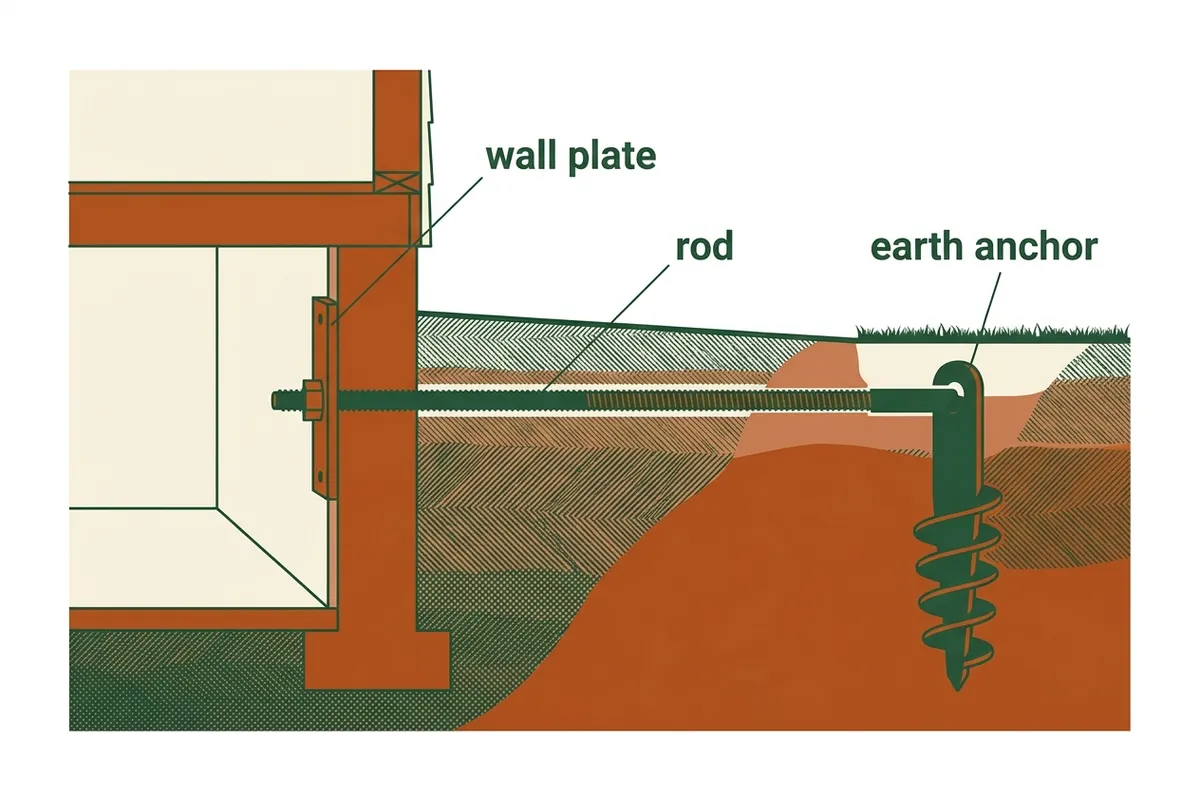
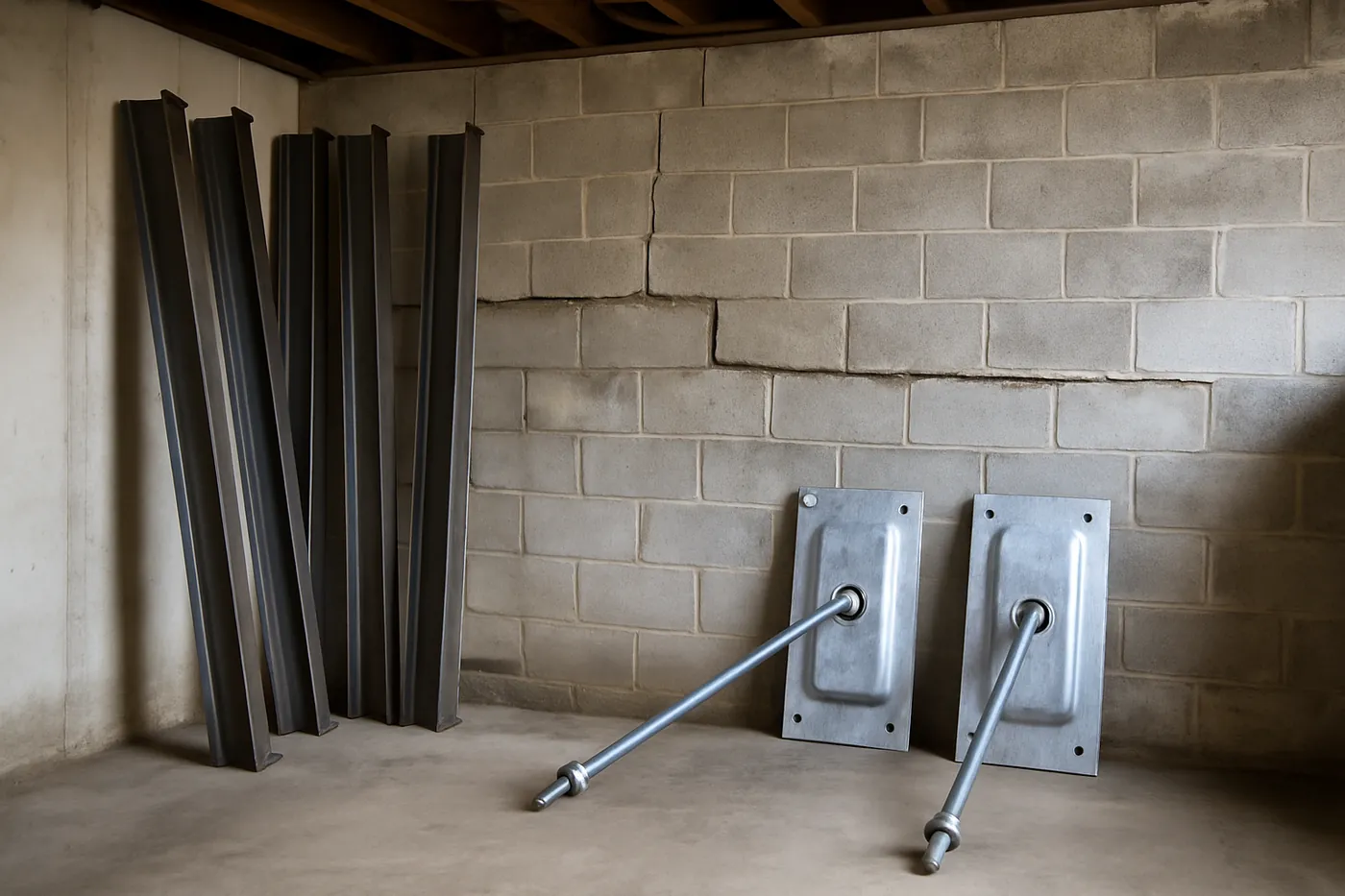
Steel piers carry the footing below the active clay — beneath the swing zone and the frost churn — to bearing that ignores both, each pier logged; the mechanics live on the piering page and the steel choice on the helical-versus-push page. KC scopes routinely pair piers with water management, because on Group D soil the moisture that drove the settlement has nowhere to go on its own — and with wall restraint where the same saturation is pushing laterally. Cracked masonry gets injection and stitching once movement is resolved. The cost guide itemizes every range.
The first year after the piers
Piers stop the movement; they don’t erase its history. Give the house a full seasonal cycle before chasing cosmetics, and in Kansas City that cycle includes something most markets don’t: 100-plus freeze-thaw cycles working every crack in the house between December and March. Hairline cracks breathe through that, so patch drywall and re-point brick after a complete year and you patch once. Monitoring is free — a dated photo and a pencil line drawn across each crack answers “did it move?” in seconds. Then keep water away from the perimeter, because on Group D soil that drains at nearly nothing, standing water beside the house is the raw material for both the settlement you fixed and the frost pressure you haven’t.
Settlement questions, straight answers
Why is KC settlement worse than most Midwest markets?
The numbers are simply bigger. Wymore-Ladoga soils run 60 to 80 percent clay with USDA's 'very high' shrink-swell rating — more clay means more volume change per moisture swing — and Group D drainage means water leaves slowly, so the wet-dry contrast under a footing is sharper. Same Midwest mechanism, higher amplitude, faster accumulation.
What do 100 freeze-thaw cycles a year add to it?
A second engine. Each winter, water in the top three feet freezes, expands, thaws, and resettles — a hundred or more times. That churn works cracks wider, loosens backfill, and helps the summer shrinkage gaps fill with debris so the footing can't ride back up. It's why KC damage accumulates even in years the summer was kind.
Which side of a KC house drops first?
The one working hardest: south and west exposures that bake in late summer, corners where a downspout concentrates and then abandons water, and walls beside mature silver maples pulling moisture in a dry August. On Group D soil the pattern sharpens, because whatever moisture arrives stays local instead of draining evenly away.
Can drainage corrections stop it without piers?
Early on, sometimes — this metro's poor drainage means grading and downspout fixes buy more stability per dollar here than almost anywhere. But Group D soil limits what drainage can do: the ground itself holds water. Once the survey shows a footing has genuinely dropped, piers do the lifting and the drainage work protects the result.
What does settlement repair cost in Kansas City?
Most structural repairs run $3,800 to $12,500, with piers at $1,200 to $3,000 each placed where the elevation survey shows loss — counts cluster along the affected run rather than circling the house. The written scope prices every pier location individually, so the number explains itself before work starts.
Get a free Kansas City foundation evaluation
Tell us what the house is doing — cracks, a leaning wall, doors gone crooked, water in the basement — and we'll schedule an evaluation with photos and crack measurements. We reply the same business day.